
Measuring What matters
in enterprise ai
Lessons from Four Years with Wharton
The Adaptive Advantage is the fourth annual study from Wharton Human-AI Research
and GBK Collective. Wharton directs the research agenda, provides academic direction
and publishes the report. GBK designs the instrument and sample, runs the study and
analytics, and generates the insights. Having led the inaugural study in 2023, GBK has
fielded every wave since, providing a consistent yardstick across four years of change.
Executives need benchmarks, not anecdotes. Four survey design decisions determined what this year's data could reveal.
01
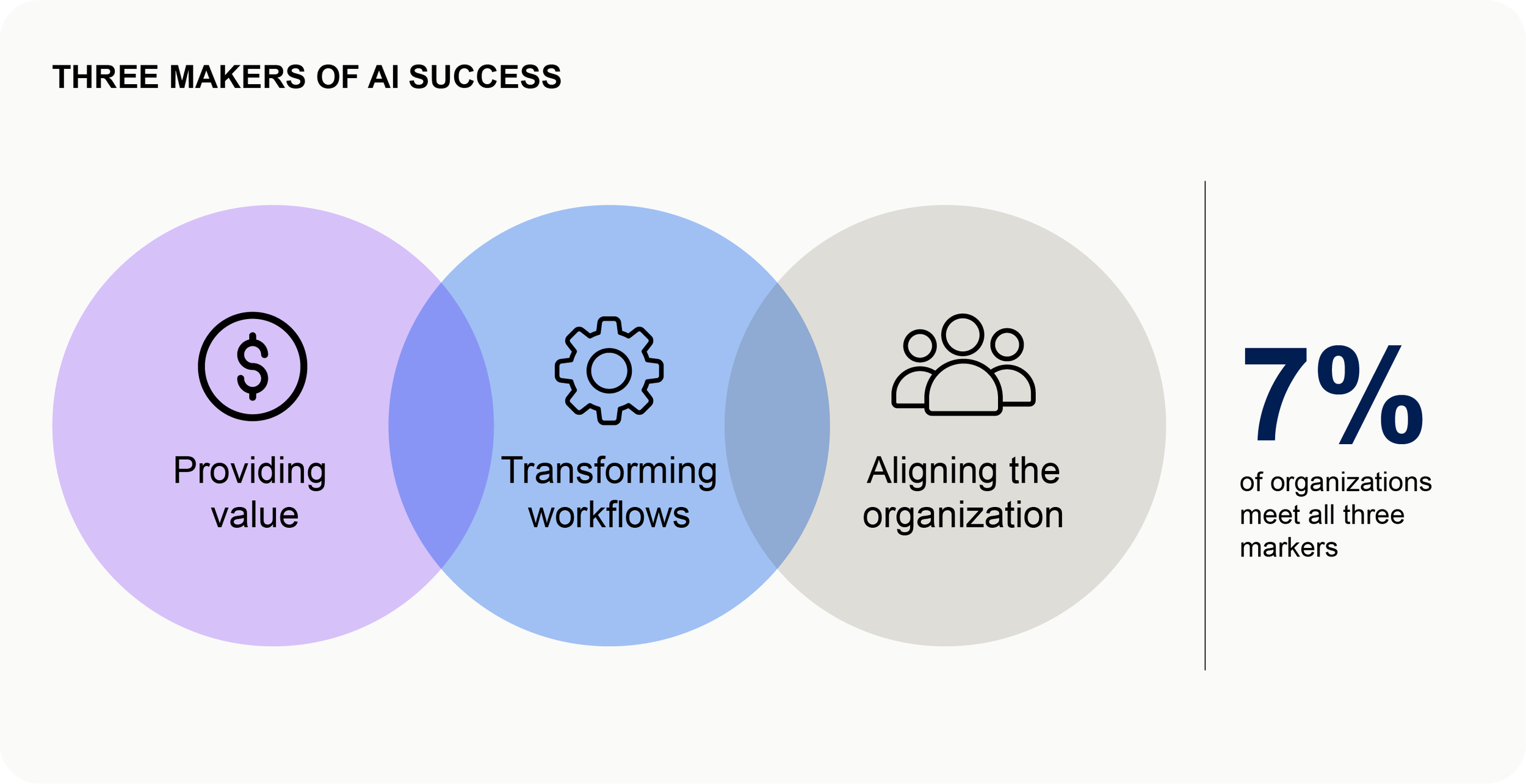
A headline of 80% positive ROI suggests broad success. To test it, we defined three separate markers of AI success (proving value, transforming workflows and aligning the organization), each with explicit conditions. Workflow transformation, for example, requires AI embedded in core processes, active use of agents and significantly changed workflows. Only 7% of organizations meet all three markers. A looser definition would have produced a more favorable figure and a less useful one.
Defining Success Before Measuring It
02
Hearing from the Workforce as Well as Leadership
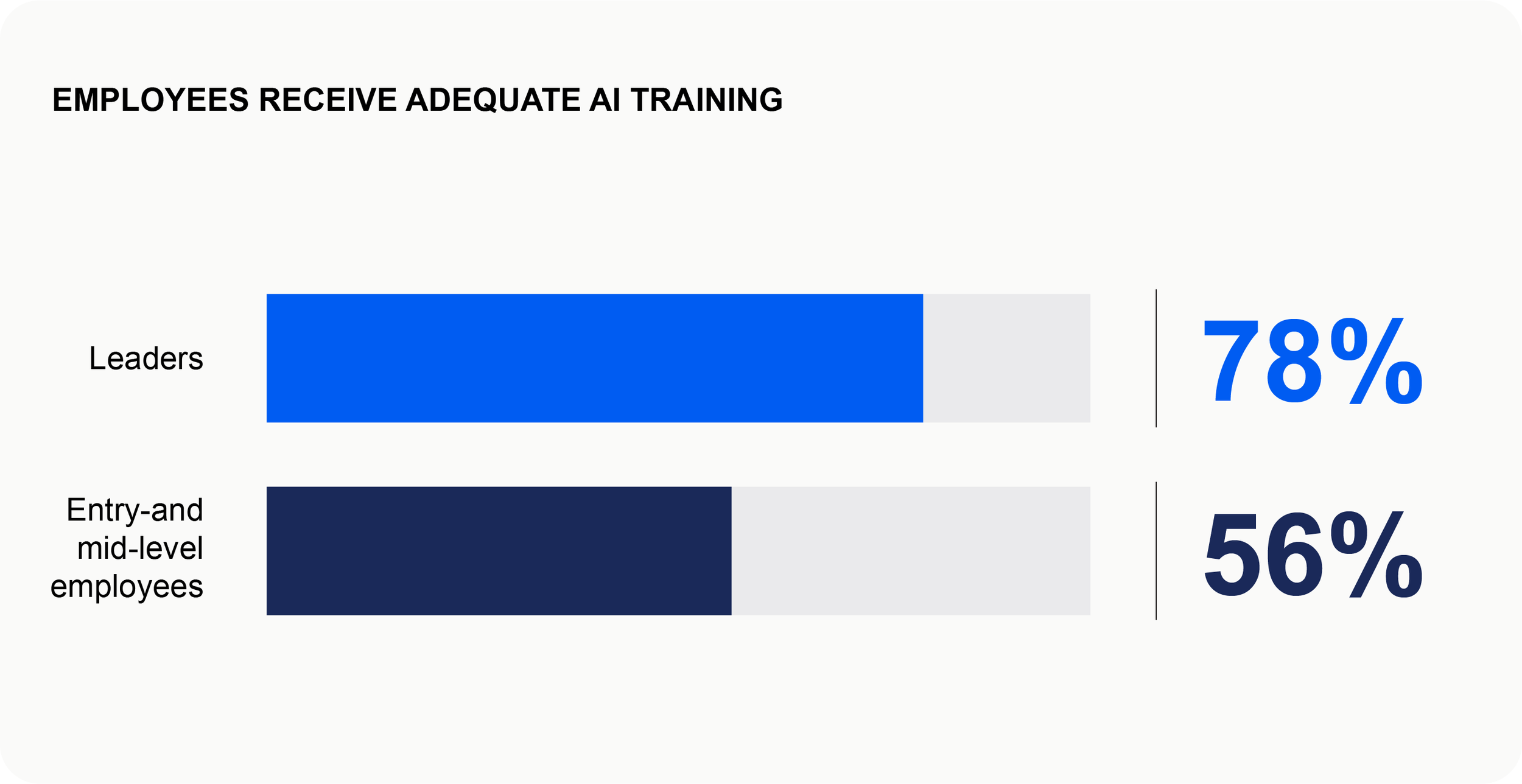
Prior waves surveyed enterprise leaders only. This year we added 409 entry- and mid-level employees, so that the difference between leadership's view and the workforce's could be measured rather than assumed. The clearest divergence concerns training: 78% of leaders believe employees receive adequate AI training, against 56% of employees. A leader-only design would not have detected it.
03
Maintaining Comparability and Disciplined Inference
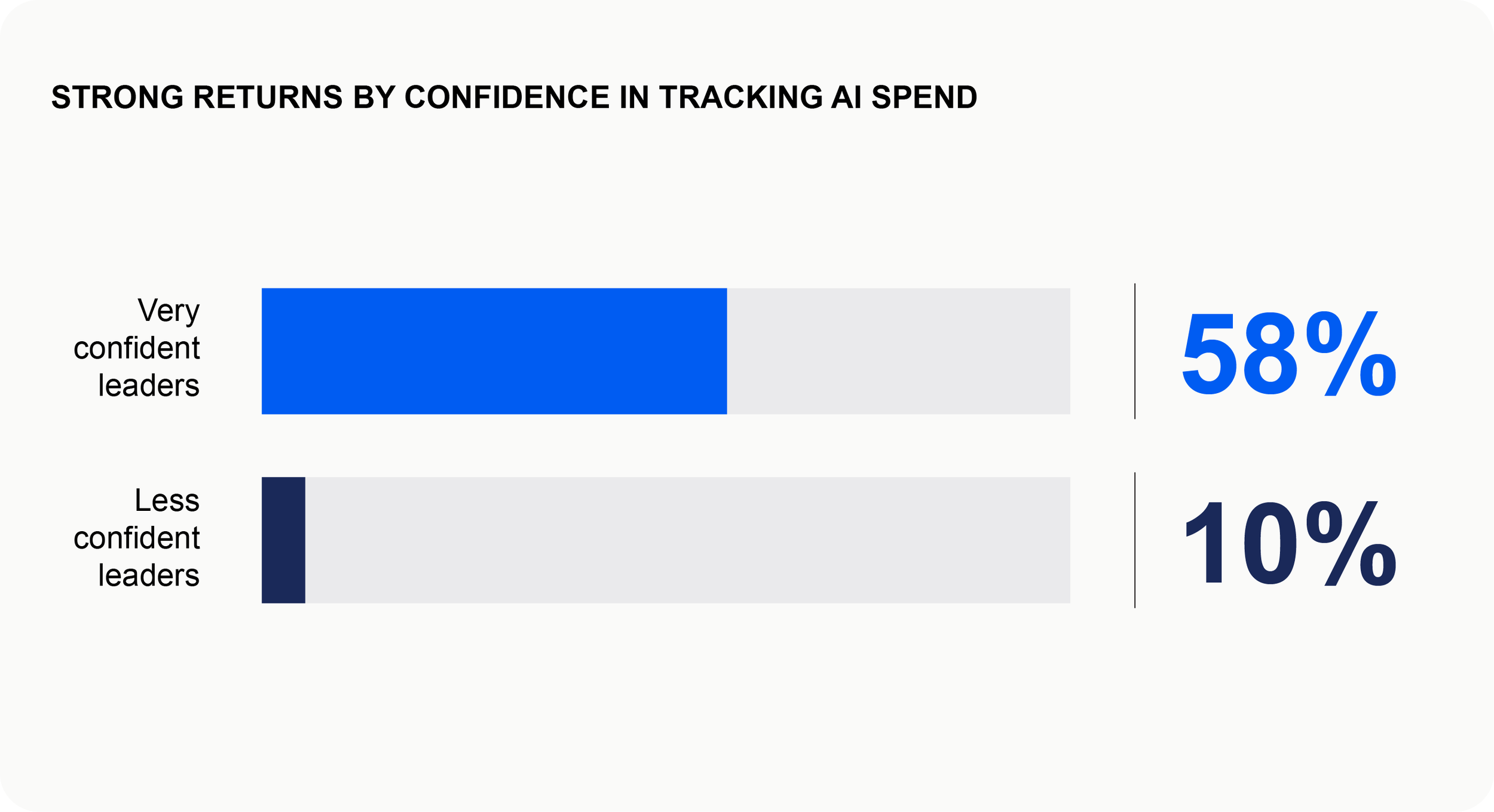
Leader and employee responses are reported separately and never combined. Year-over-year trends appear only where question wording, scale and base are consistent. Associations are described as associations. Leaders very confident in their ability to track AI spend report strong returns at 56%, versus 10% of less confident leaders. These respondents are also more enthusiastic about AI generally, however, so part of the difference may reflect conviction rather than capability. The report states that limitation directly.
04
Reporting Results That Complicate the Narrative
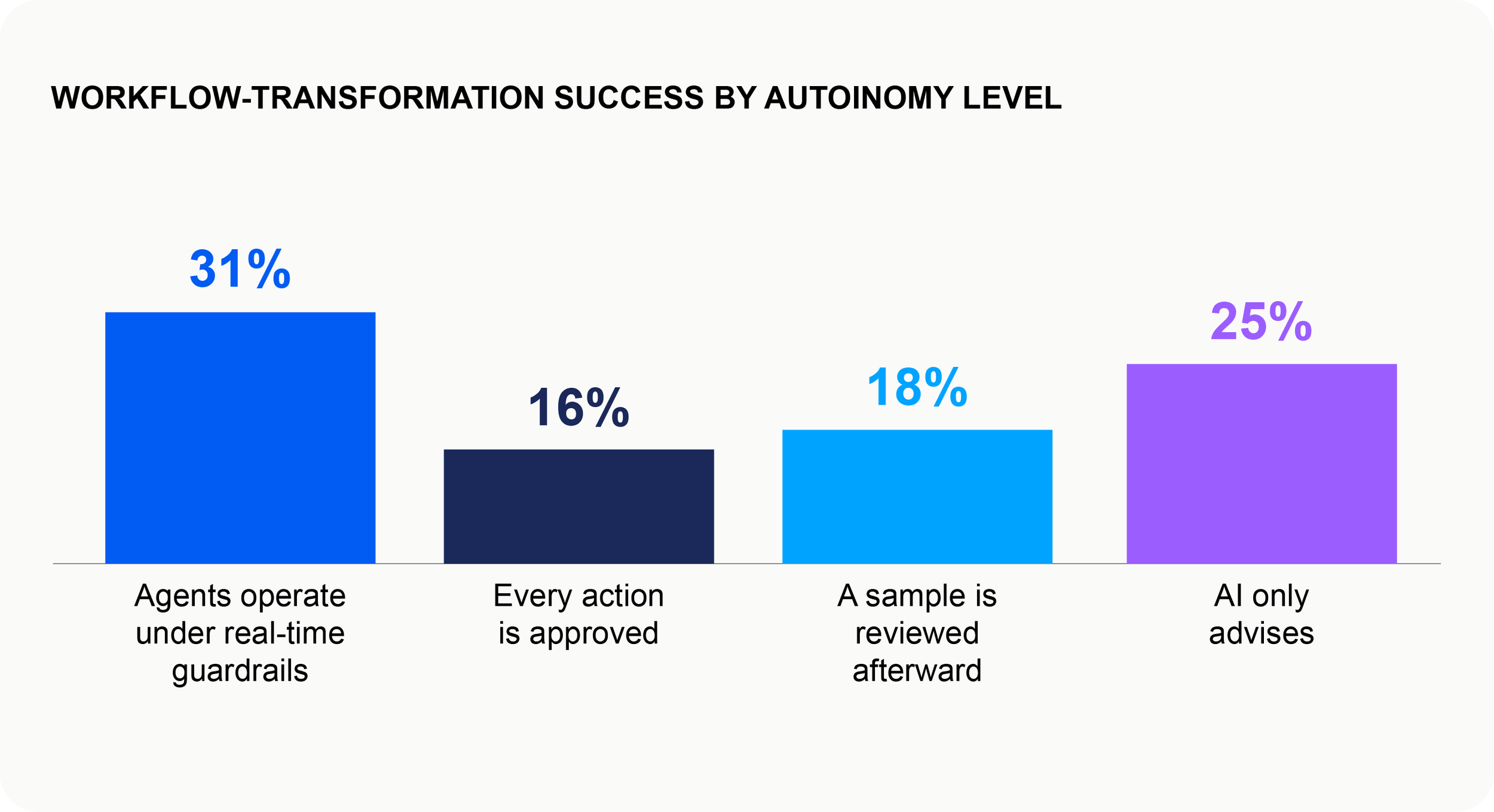
The prevailing assumption is that greater automation yields greater transformation. The data show a different pattern. Workflow-transformation success is highest at the two ends of the autonomy scale (31% where agents operate under real-time guardrails; 25% where AI only advises) and lowest in between (16% where every action is approved; 18% where a sample is reviewed afterward). The report identifies this as counterintuitive. We retained it, noted that the guardrails group is small (68 respondents) and should be read as directional, and presented it as found.

Study: 15-minute online survey of U.S. enterprise organizations (1,000+ employees, $50M+ revenue), fielded July 9–29, 2026. Managers and above, n=1,007; entry- and mid-level employees, n=409.